As electric cars continue to become a familiar sight on UK roads, they’re reshaping more than just how we drive: they’re also challenging our expectations around social responsibility and the courtesy that comes with travelling with others. 


One question in particular continues to spark debate: Who should pay to charge the car on a shared journey?

Whether you're road-tripping in the all-electric SEALION 7 or topping up your ATTO 3 outside a friend’s house, the etiquette around electric vehicle (EV) charging isn’t always clear.


To find out how drivers are navigating this social shift, we conducted a nationally representative survey of 2,000 adults in the UK. The results reveal a nation still working out the rules, with opinions divided by age, location and personal experience.

Who Pays to Charge? A Nation Split on What’s Fair

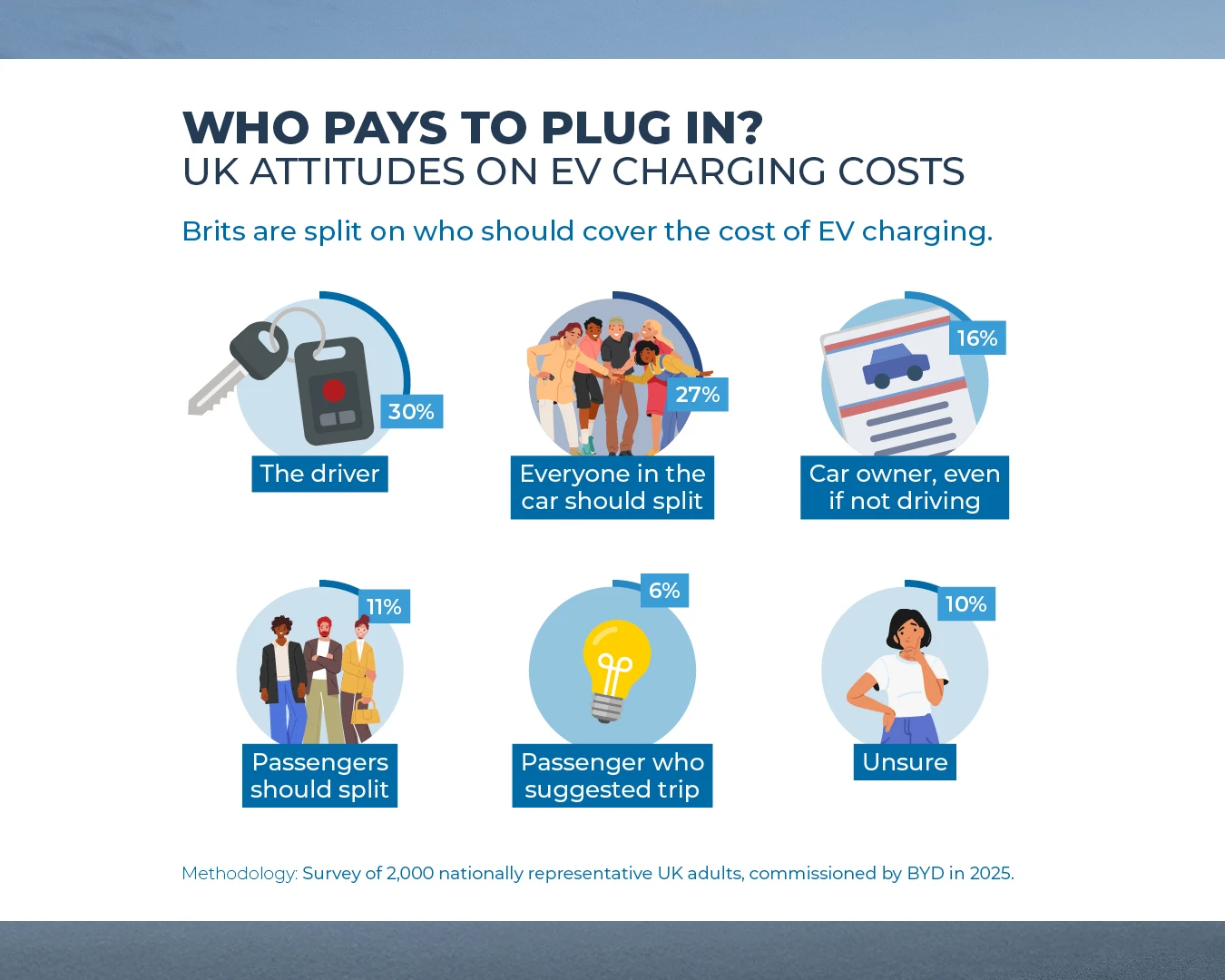
When asked who should cover the cost of EV charging during a shared trip, Brits gave a surprisingly mixed response:


  • 30% said the driver should pay
  • 27% believe everyone in the car should split the cost equally
  • 16% think the car owner should pay even if not driving
  • 11% said the passengers should split the cost amongst themselves
  • 6% believe the passenger who suggested the trip should pay

Traditionally, the driver was expected to foot the fuel bill, no questions asked, but EVs are quietly creating a shift in this dynamic. 


The relatively even spread in responses shows a shift away from tradition, especially as one in 10 (10%) respondents didn’t know who should pay.


This echoes findings from previous research by IAM RoadSmart, which found that 64% of UK drivers think it's socially acceptable for designated drivers to ask passengers to contribute to fuel costs. 


With more of us opting for EVs and charging infrastructure varying by location and speed, more drivers are rethinking the rules around charging etiquette.

Where You Live Shapes Your Charging Expectations

Across the UK, the most popular opinion is that the driver should pay (30%), but this sentiment is far stronger in some cities than others. 


In Portsmouth (41%), drivers are most likely to say they’ll pick up the whole bill, while just 17% in Gloucester feel the same. 


Worcester stands out for fairness: a full 42% of drivers there believe everyone in the car should split the cost equally, the highest rate in the country. 


The most obvious divide comes with the idea that passengers should split the cost equally, without any input from the driver. While this was a relatively unpopular option overall (11%), it gained surprising traction in Aberystwyth, where 50% of respondents backed it, the highest by far. Compare that to Chelmsford, where only 2% supported it, showing just how varied opinions can be across regions.


These differences show how local culture can shape expectations, especially as the UK continues to shift towards shared mobility, EV adoption and more conscious car use.
Young Drivers Expect to Pay, While Older Generations Prefer Splitting Costs

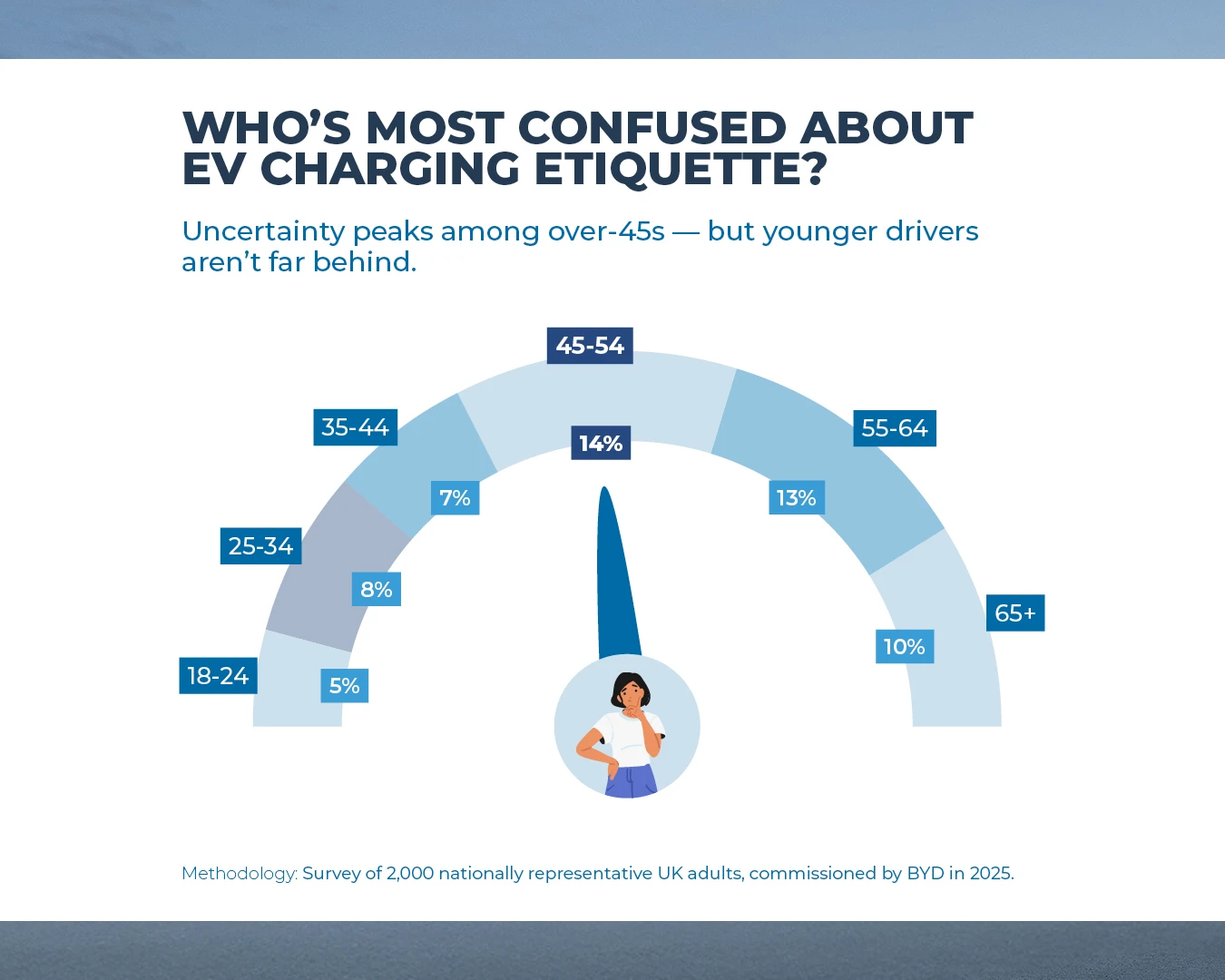
Interestingly, the biggest generational gap wasn’t between Gen Z and Boomers. Instead, it was between drivers in their early 20s, and drivers in their late 20s/early 30s: 


  • Among 18–24s, 35% think the driver should always pay, the highest of any age group
  • 31% of 25–34s and 30% of 35–44s believe the cost should be shared equally
  • 45–54s swing back to tradition, with 31% again saying the driver pays

This could reflect experience and car ownership patterns, as younger drivers who are newer to the roads may see paying as a default. Those in their 30s and 40s, more likely to co-own family vehicles, are leading the shift toward shared costs.

At Public Charging Stations, New Rules Are Emerging

With the number of charging stations increasing rapidly in locations across the country, Public EV charging brings its own etiquette challenges. Some of the most common and widely accepted public charging rules include:


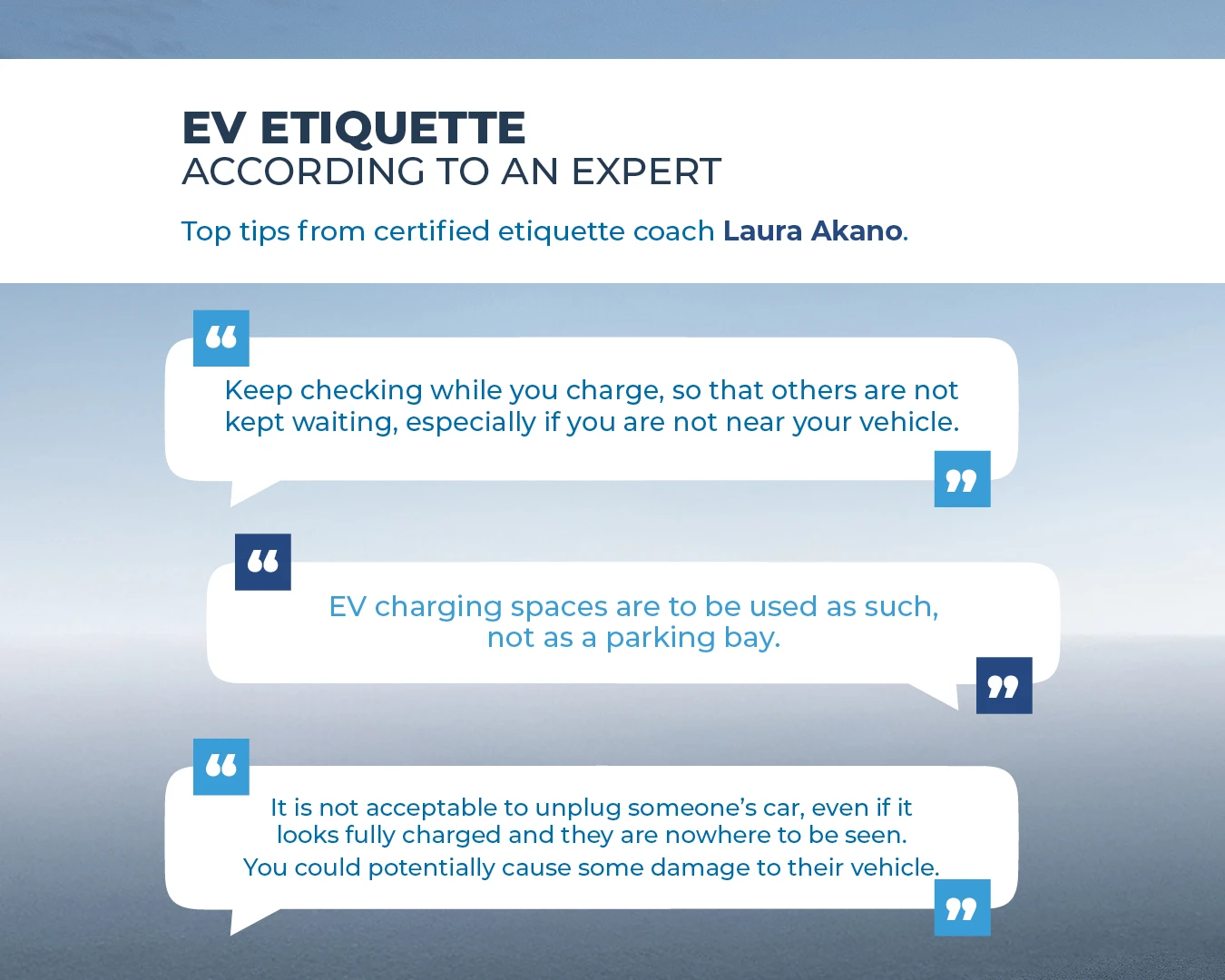
  • Don’t unplug someone else’s car. Even if it looks fully charged, it’s not your call.
  • Don’t overstay. Once you’re done charging, move your vehicle so others can use the space.

Don’t block bays. EV chargers are for active charging, not convenient parking.

We consulted Laura Akano, an internationally certified etiquette expert, for guidance on best practices: 


She confirms: “Key etiquette rules when using a public EV charge include: Keep checking while you charge, so that others are not kept waiting, especially if you are not near your vehicle. EV charging spaces are to be used as such, not as a parking bay. It is not acceptable to unplug someone's car, even if it looks fully charged and they are nowhere to be seen. You could potentially cause some damage to their vehicle.

Plugging In at Someone’s Home: What’s Polite?

Topping up your EV’s charge at a friend’s house may seem minor,  but someone has to pay for the electricity used. As home energy bills remain high, even a short charge can result in increased utility bills. 


Here’s what good etiquette looks like: 

  • Always ask first. Never assume you can plug in, even though they also own an EV. 
  • Offer to contribute. A few pounds or a takeaway coffee goes a long way.
  • Don’t charge for long periods without permission.


Laura summarises: “When visiting a friend or relative and you plug in your car at their home, it is considerate to offer to pay towards their electricity cost, especially as energy costs are quite high at the moment. It is bad manners to wait for them to bring it up.

EV Etiquette is Still Evolving

As EVs continue to make an impact on UK roads, they’re also pushing drivers to consider charging etiquette. There’s no single rule on who should pay to charge, but the trend is clear: more drivers are open to splitting costs, especially during longer trips or when using someone else’s electricity.


The key is open communication, whether you're borrowing a charger, sharing a ride or planning a weekend away.


Steve Beattie, Sales and Marketing Director at BYD, summarises: "Electric vehicles are prompting us to rethink how we share costs and communicate with each other. Charging isn’t as straightforward as filling up with petrol, so the conversations about who pays are becoming part of the new normal.


"At BYD, we design our cars to make this transition as smooth as possible. Features like real-time charging data and intuitive displays help drivers understand exactly what they’re paying for, and when to move on to keep the journey fair for everyone."


To explore how BYD’s range of EVs fits into this new driving landscape, visit our range of electric and hybrid cars and find the perfect model for your next journey.

Methodology

This article is based on a nationally representative survey of 2,000 UK adults, conducted by OnePoll in June 2025 on behalf of BYD UK. Respondents were asked about EV charging habits, expectations and etiquette, with results analysed by age, region and lifestyle.