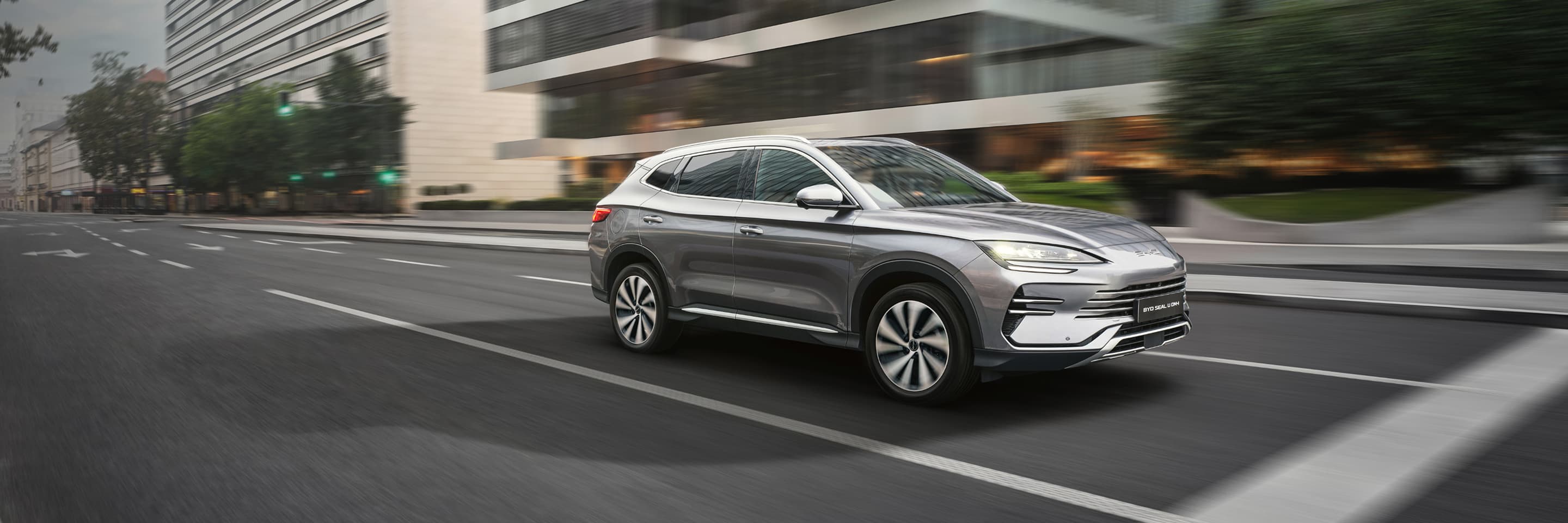
Conflicting information can make purchasing a plug-in hybrid car even more confusing - so what are the misconceptions you should be looking for?
Hybrid batteries don’t last
All plug-in hybrid batteries are designed to last as long as the car. Manufacturers typically offer an 8-year/100,000-mile warranty on hybrid batteries, with many models exceeding 150,000-200,000 miles. In short, you’re unlikely to have to replace a hybrid car battery while you own the car.
The BYD Blade Battery is used in all of our plug-in hybrid cars, including the BYD SEAL U DM-i. It’s designed for an exceptional lifespan and can exceed 5,000 charge cycles.
Worries around hybrid car battery longevity come from general battery anxiety that’s been around since electric and hybrid cars became more accessible. Drivers also confuse electric car batteries with smartphone battery degradation, which is not the same.
There are also worries around the cost of having to replace a battery, but in reality, this is unlikely to be an issue.
Plug-in hybrids need to be charged every day
You don’t strictly need to charge a plug-in hybrid every day to reap the benefits. If you’ve been on a long journey and your battery power is low, you will need to plug in and recharge. However, if you’ve only been using your PHEV for short trips, the battery might not run down as quickly.
To maximise efficiency and longevity of the battery, try to keep the charge between 20%-80% SOC. Keep an eye on your percentage charge and top up as and when necessary.
This misconception comes from drivers assuming PHEVs are the same as EVs. Many worry that if they don’t charge every day, their vehicle won’t work properly, and they may become stranded. This misconception also comes from those who think PHEVs are inconvenient unless you have a strict charging routine.
Plug-in hybrid cars aren’t powerful
Many plug-in hybrid cars are more powerful than petrol and diesel equivalents.
Instant torque from the electric motor means quicker acceleration and a smoother drive, thanks to two power sources. PHEV drivers can also take advantage of improved traction. Combining petrol and electric power results in improved performance that remains consistent throughout your journey. Plug-in hybrids are not underpowered; they are engineered to be efficient and powerful on the road.
Plug-in hybrid cars are no better for the environment than ICE cars
In most real-world situations, plug-in hybrids produce lower emissions than petrol and diesel cars. Plug-in hybrids are designed to reduce both fuel consumption and tailpipe emissions, especially for short journeys and during start-stop trips.
During short journeys, tailpipe emissions drop to zero - this is not possible with a petrol or diesel car. This means a large portion of total annual mileage can be powered by electricity, fuel economy improves, and total fuel burned over the vehicle’s lifespan is reduced.
Efficiency also depends on driver behaviour. If drivers keep their PHEVs charged, fuel use drops, emissions fall, and short trips become emission-free. If drivers neglect to charge their EV, it’ll rely on a petrol engine to function, meaning full environmental potential isn’t maximised.