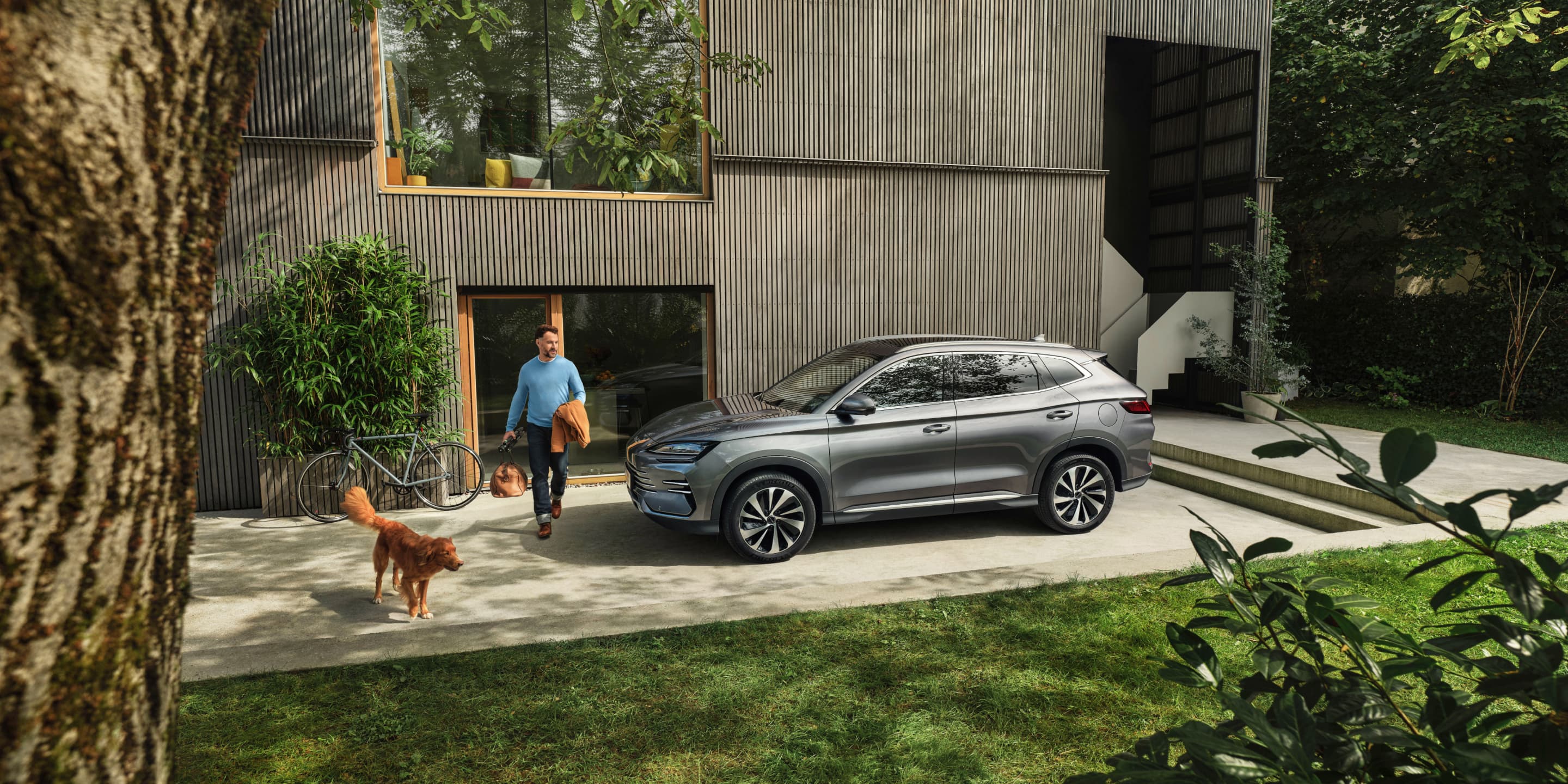
Combining electric power with an internal combustion engine, plug-in hybrid cars offer flexibility on the road with improved efficiency so you can go further for less while reducing carbon emissions.
Plug-in hybrid cars are different from electric cars and traditional petrol and diesel cars. But what is a plug-in hybrid car and how do they work? Find out everything you need to know below.
Find out more about your hybrid car options in our guide: HEV, BEV and PHEV explained: What's the difference? With our electric car guides, you can also learn more about choosing the right electric car for you and how hybrid cars work to help you make your decision.
A plug-in hybrid car, or a PHEV, combines an electric motor and a traditional internal combustion engine. It can operate using electric power only, fuel power only or a combination of both.
Plug-in electric vehicles have a large battery that can be recharged by plugging the car into an external charger like a home charging or public charging station. Plug-in hybrid cars can travel using all-electric mode for short distances, with the fuel engine kicking in when the electric charge has depleted.
They’re a good option for reducing fuel consumption and emissions and make a great alternative if you’re not quite ready to switch to fully electric driving.
A plug-in hybrid car combines an internal combustion engine with an electric motor. The car has a rechargeable battery that can drive the car over a limited range depending on the make and model. The internal combustion engine kicks in when the battery is depleted or when more power is needed.
For example, the BYD Seal U-DMi has an all-electric range of up to 78 miles - boasting up to 699 miles of combined range when using both the electric motor and internal combustion engine.
The electric battery needs to be charged by plugging into a charging station, a charging point at home or a 3-pin plug. Once the electric range is used up, a plug-in hybrid will automatically switch to hybrid mode, where the electric motor and the ICE work together. The combustion engine can take over when heavy acceleration is needed, like motorway driving, long trips and when the car’s battery is low.
PHEVs have a larger battery than other HEVs which means they can cover longer distances with all-electric driving. PHEVs are also different to HEVs because they can be plugged into an external charger. Plug-in hybrid vehicles also use regenerative braking to boost the battery, extending the electric range and improving efficiency.
Plug-in electric cars charge when plugged in and when driving. To recharge your PHEV, you’ll plug it into an external power source - whether that’s a home charger or a public charging station.
Your PHEV will also recharge as you’re driving. The engine and regenerative braking can charge the battery, extending your PHEV’s all-electric range.
Even if you don’t plug your PHEV in to charge, you’ll still be able to drive it powered by the internal combustion engine. PHEVs can still be driven if you don’t charge the battery. With the help of regenerative braking, your PHEV will be powered by its internal combustion engine and will use the energy converted from braking to improve efficiency.
When it comes to choosing a plug-in hybrid vehicle, there are a few factors to consider, including your driving habits, access to charging infrastructure and your carbon footprint.
A hybrid car is a good option for those commuting — they’re well suited to stop-start traffic, but they’re also a good option for those travelling longer distances who don’t want to worry about electric range.
Let’s weigh up the advantages and disadvantages of plug-in hybrid cars:
If you’re unsure about whether a plug-in electric vehicle would suit you, weighing up your options can be helpful. If you’re looking to reduce your carbon footprint and experience some of the most advanced tech on the market, choosing an electric car could be a great option.
If you don’t have access to charging infrastructure but you’d still like to do your bit for the environment, explore self-charging hybrid electric cars. If you’re simply looking for a way to improve fuel economy without changing your driving experience, a mild-hybrid car could be a great option.
BYD’s advanced, innovative hybrid technology is available in the BYD Seal U DM-i. For more about how it works, take a look at our Super DM technology page.